
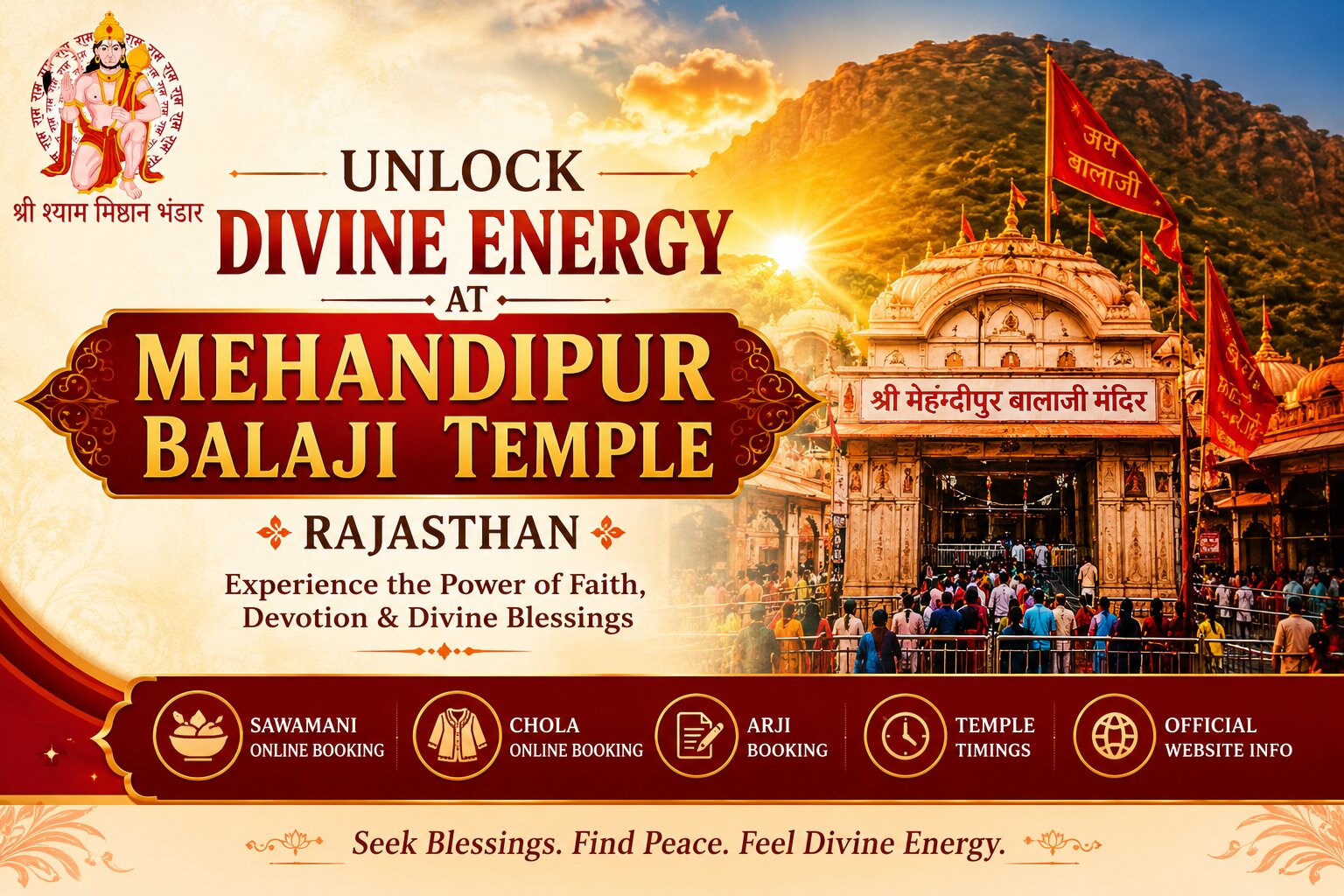
For centuries, Mehandipur Balaji Temple has been one of India's most revered spiritual destinations, attracting millions of devotees who seek divine blessings, peace of mind, and protection from negative energies. Located in Rajasthan's Dausa district, this sacred temple is dedicated to Lord Hanuman in his powerful Balaji form and is renowned for its unique rituals and unwavering spiritual significance. Whether you are planning your first pilgrimage or returning for another visit, this guide covers everything you need to know, including darshan, rituals, travel information, and the importance of Mehandipur Balaji Sawamani.
Unlike many temples dedicated to Lord Hanuman, Mehandipur Balaji is known for its centuries-old traditions that symbolize faith, devotion, and the victory of good over evil. Devotees from across India visit the temple believing that sincere prayers here bring strength, courage, and relief from life's challenges.
The temple houses three primary deities:
Together, these divine forms represent protection, justice, and spiritual cleansing, making the temple one of Rajasthan's most spiritually significant pilgrimage sites.
The origins of Mehandipur Balaji Temple date back several centuries. According to local beliefs, the idol of Lord Balaji appeared naturally within the hills, making it a self-manifested deity. Over time, the location became a sacred center where devotees experienced remarkable spiritual transformations.
Today, the temple welcomes thousands of pilgrims every day, especially during Tuesdays, Saturdays, Hanuman Jayanti, and other important religious occasions.
Every devotee has a unique reason for visiting the temple. Some seek blessings for health and prosperity, while others pray for success, family harmony, or mental peace.
Visitors commonly come to:
The temple encourages visitors to maintain faith, discipline, and respect throughout their pilgrimage.
One of the most sacred offerings made by devotees is Mehandipur Balaji Sawamani. A Sawamani is a traditional food offering prepared with devotion and presented to Lord Balaji as an expression of gratitude or while praying for a wish to be fulfilled.
After the offering is accepted, the blessed food (Prasad) is distributed among devotees and the needy, symbolizing sharing blessings with others.
Offering Sawamani is considered an act of humility, gratitude, and devotion rather than a ritual performed for material gain.
The temple follows traditional rituals every day from early morning until evening. During darshan, devotees witness the powerful aarti and experience an atmosphere filled with devotional chants.
Common offerings include:
These offerings are made according to temple traditions and are performed with deep faith.
To make the pilgrimage easier for devotees visiting from different parts of India, several temple services can now be arranged online.
Available services include:
These facilities help devotees schedule religious offerings conveniently before their visit, reducing waiting time during busy festival seasons.
Knowing the temple schedule helps visitors plan a smooth pilgrimage.
The Mehandipur balaji temple timings generally include morning and evening darshan sessions, with separate timings for aarti and special rituals. Since schedules may change during festivals and religious occasions, visitors should always verify the latest timings before planning their journey.
Arriving early in the morning usually provides a more peaceful darshan experience with comparatively smaller crowds.
Before planning your pilgrimage, it is advisable to check the Mehandipur balaji official website for the latest announcements regarding darshan schedules, temple guidelines, festivals, and official booking information.
The official source provides the most reliable updates for devotees traveling from different states.
The Mehandipur balaji mandir is situated in the Dausa district of Rajasthan and enjoys good road and rail connectivity.
Regular buses and taxis operate from Jaipur, Agra, Delhi, Bharatpur, and nearby cities.
The nearest railway stations are Bandikui Junction and Hindaun City, from where taxis and local transport are readily available.
Jaipur International Airport is the nearest airport, located approximately 110 kilometers away. From Jaipur, travelers can hire taxis or board buses directly to the temple.
The temple remains open throughout the year, but the most comfortable months for visiting are from October to March when Rajasthan experiences pleasant weather.
Special occasions that attract large numbers of devotees include:
If you prefer a quieter spiritual experience, visiting on weekdays outside major festivals is recommended.
To ensure a respectful and peaceful pilgrimage, devotees should follow temple customs.
Some important guidelines include:
Following these simple practices helps preserve the temple's sacred atmosphere for everyone.
After seeking blessings at Mehandipur Balaji Temple, visitors can explore several nearby attractions, including:
These destinations add cultural and historical value to your Rajasthan journey.
A visit to Mehandipur Balaji Temple is much more than a religious trip—it's an experience of unwavering faith, devotion, and inner peace. Every prayer offered here reflects the deep spiritual traditions that have been preserved for generations. Whether you come for darshan, participate in rituals, or offer Mehandipur Balaji Sawamani, the temple leaves every devotee with unforgettable memories and renewed spiritual strength. Plan your pilgrimage with proper preparation, respect temple traditions, and embrace the divine blessings that make this sacred destination one of Rajasthan's most cherished pilgrimage sites.
Mehandipur Balaji Temple is located in the Dausa district of Rajasthan, India, and is easily accessible by road, rail, and air.
The temple is famous for its deep spiritual significance, Lord Hanuman worship, centuries-old traditions, and the unwavering faith of millions of devotees.
Sawamani is a sacred food offering made to Lord Balaji as an expression of gratitude, devotion, or prayer fulfillment. The blessed food is later distributed as Prasad.
Yes. Devotees can arrange various religious offerings through the official booking facilities before their visit, depending on the services currently offered by the temple.
Tuesdays and Saturdays are considered especially auspicious for Lord Hanuman worship. However, weekdays generally offer a less crowded darshan experience.
Visitors should wear modest, comfortable clothing that respects the temple's religious traditions and maintain proper decorum inside the premises.
Darshan duration depends on the day and season. During weekdays, it may be relatively quick, while weekends and festivals often have longer waiting times.
Yes. Families, children, and senior citizens regularly visit the temple. Planning your visit during non-peak hours can make the experience more comfortable.
.png)